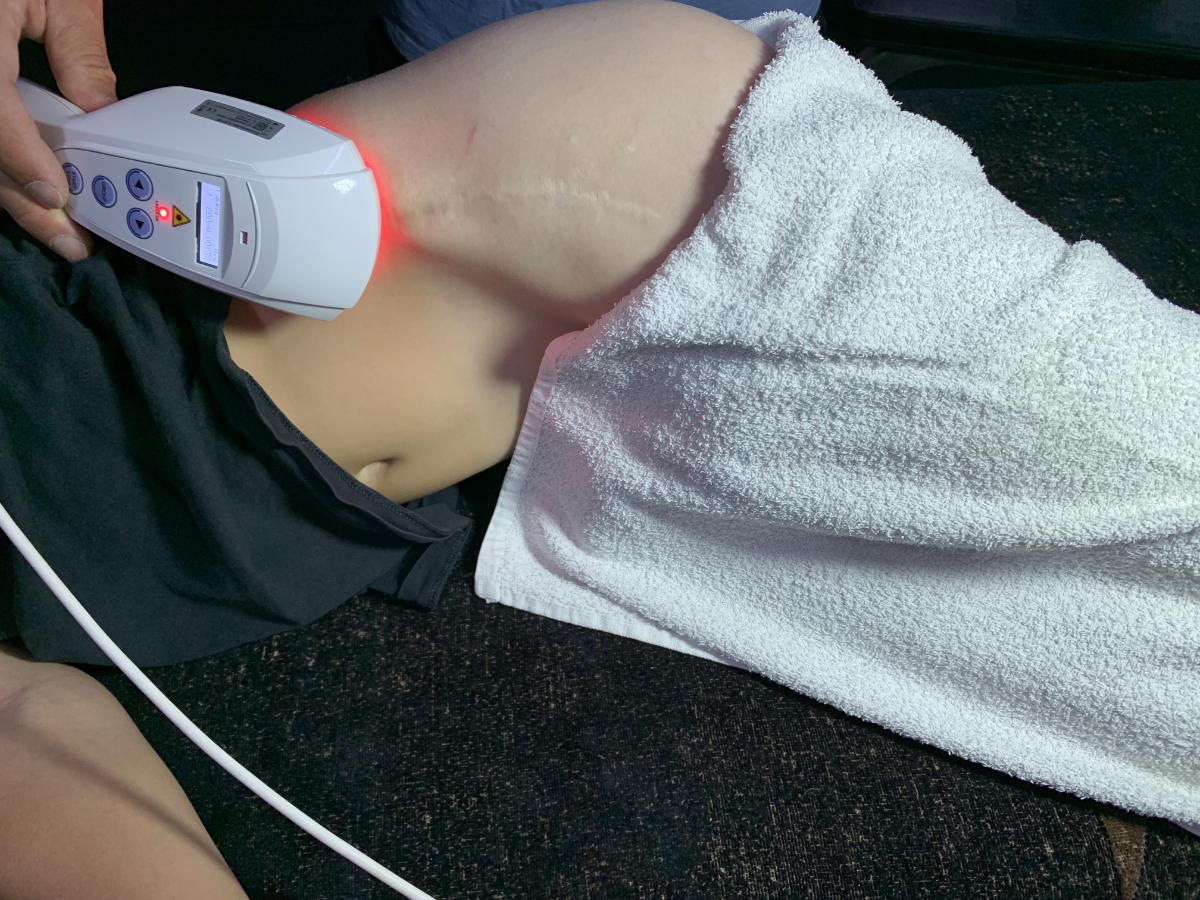
Low-Level Laser Therapy (LLLT) for Scar Healing and Improvement
Low-Level Laser Therapy (LLLT), also known as Photobiomodulation (PBM), supports the healing and cosmetic improvement of scars by stimulating cellular repair and modulating inflammation. It works at the mitochondrial level, increasing ATP production and enhancing blood flow, which promotes faster tissue repair. These effects lead to better-structured collagen formation and a reduction in excessive scar tissue — resulting in softer, flatter, and more flexible scars over time.
Clinical research has shown that PBM can accelerate wound closure, reduce postoperative pain, and improve the quality and appearance of surgical and traumatic scars. A 2024 meta-analysis found that wounds treated with LLLT healed significantly faster and with less pain compared to untreated wounds.¹ In surgical cases, such as thyroidectomy or cosmetic procedures, studies using 830 nm PBM demonstrated improved Vancouver Scar Scale scores and patient satisfaction after only a few weeks of treatment.²
While the results vary by individual and treatment parameters, improvements are typically seen within 4–8 weeks when PBM is used regularly. Many studies report faster healing rates of 20–40% compared to standard care alone, along with reductions in pain intensity of up to 50%.³ For hypertrophic or keloid scars, PBM has shown promising reductions in inflammation and itching, and may help prevent recurrence when used as part of a combined approach alongside conventional therapies.⁴
Overall, PBM is a non-invasive, drug-free, and well-tolerated option for improving scar recovery — from recent surgical incisions to long-standing keloids. When applied early in the healing process, it can help prevent excessive scar formation and support smoother, more natural-looking results.
References
1. Taha N. et al. The effects of low-level laser therapy on wound healing and pain management in skin wounds: a systematic review and meta-analysis. Cureus (2024). See Article
2. Kim Y.H. et al. Photobiomodulation therapy with an 830 nm LED for prevention of thyroidectomy scars: randomized double-blind, sham-controlled clinical trial. Lasers in Medical Science (2022). See Article
3. Kawthar S. & Niveen W. Photobiomodulation therapy for enhanced wound and scar healing: visual and statistical evaluation. Lasers in Medical Science (2025). See Article
Frontiers in Medicine Review (2025). Photobiomodulation therapy in keloid management: a comprehensive review. See Article
Q: Which package do I need to purchase?
A: In our experience, people that present as soon as possible after their surgery receive the best outcomes. Those that arrive years later, may need more sessions. We have also seen a reduction in keloid scaring and stretch marks. Depending on your scar size and available time, we may also be able to treat some of those in the same appointment, or further sessions can be purchased to specifically target those areas. See our fee options here.